Routine8 min read
Scalp care is skincare: buildup, hair oils, and the case for exfoliation
Your scalp is skin — among the oiliest you have. Flakes are rarely "dryness," and the champi oil you leave in overnight may be feeding the problem. What actually works, and what is folklore.
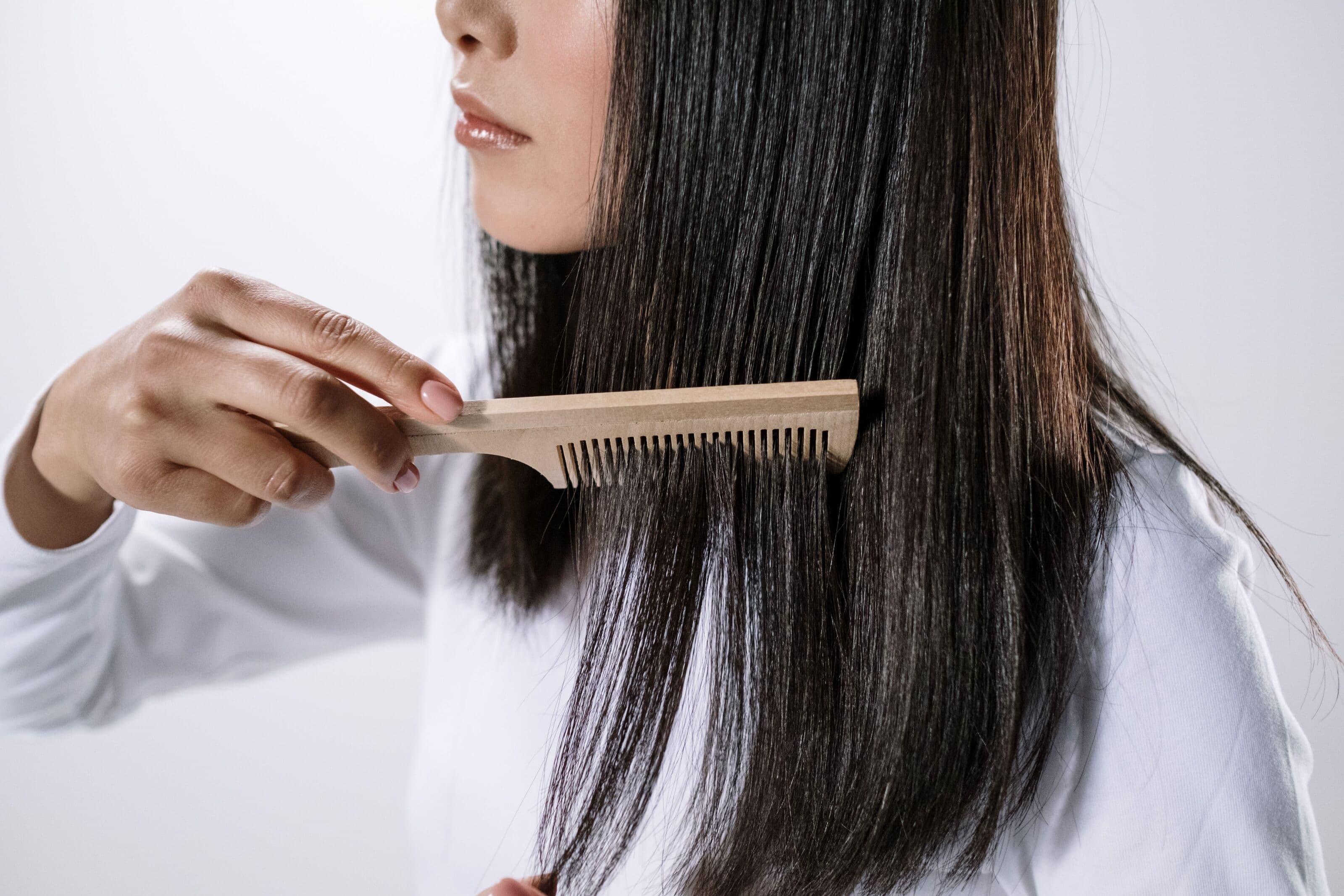
The scalp is skin. It has the same layered structure as your face, and it is among the highest-density sebaceous regions on the body — in the same range as the oiliest parts of the face (Schwartz et al., Scientific Reports, 2018). We treat the face with cleansers, exfoliants and barrier care, then ignore the skin two centimetres above the hairline. That gap is where a lot of flaking, itch and "my scalp feels tight but greasy" lives.
This post is about what's actually happening up there, and where a chemical exfoliant earns its place — particularly given two things specific to Pakistani routines: hair-oiling culture and hard water.
Flakes are usually not "dryness"
The most common misconception is that dandruff means a dry scalp, so the fix is more oil. The science says the opposite. Dandruff and seborrheic dermatitis are a three-factor problem: Malassezia yeast (a normal scalp resident), sebum, and individual sensitivity (DeAngelis et al., Journal of Investigative Dermatology Symposium Proceedings, 2005). The yeast metabolises the oils on your scalp into irritating free fatty acids; in people prone to it, that triggers flaking and itch.
The tell: true dry-scalp flakes are small and powdery. Dandruff flakes are larger and oilier, often with redness underneath. If your "dry scalp" gets worse the more oil you apply, it was never dryness — you were feeding the yeast. Malassezia is lipophilic; it lives on oil.
Where exfoliation comes in
Salicylic acid is the best-evidenced scalp exfoliant. It is a keratolytic — it softens and loosens the bonds holding dead cells together — and because it is oil-soluble, it penetrates sebum and dissolves the scale and product buildup that sit on the scalp. It is the standard ingredient in dermatologist-recognised anti-scale scalp products, typically at 1.8–3% (2% is the everyday concentration; 3% the usual over-the-counter maximum for thicker scale).
One honest caveat: salicylic acid clears the scale, but it does not kill the yeast. For active dandruff or seborrheic dermatitis, it's usually paired with an antifungal step (zinc pyrithione, ketoconazole, or selenium-based washes) that targets the Malassezia itself. Exfoliation removes what's there; the antifungal slows what's coming back.
Skip physical scalp scrubs and brushes for this. There's little solid evidence they help, and scrubbing an already-inflamed scalp tends to irritate it further. Chemical exfoliation is gentler and better-supported.
The champi question
Hair-oiling — champi — is woven into how skincare is done across Pakistan and South Asia, and there is something real in it: oils like coconut have genuine evidence for conditioning the hair shaft and reducing protein loss from the fibre. That's a benefit to your hair.
The scalp is a different story. Leaving heavy oils on the scalp — especially with infrequent washing — feeds the lipophilic yeast that drives flaking. A clinical study directly linked frequent scalp hair-oil use to more severe seborrheic dermatitis. And the traditional claim that oiling the scalp "grows hair" is cultural, not established by good evidence.
So the honest position: oil the lengths and ends of your hair if you like what it does for them. Be sparing with heavy oils on the scalp itself, and don't leave them sitting there for days — that's the part that backfires.
Hard water — real problem, but know its limits
Hard water is common across Pakistani cities, and there is direct experimental evidence it affects hair: in a controlled study, hair exposed to hard water for 30 days accumulated calcium and dropped measurably in tensile strength versus deionised water (Srinivasan et al., International Journal of Trichology, 2018). That's mineral buildup and mechanical weakening — real, and a fair reason to clarify buildup periodically.
What hard water does not do, despite what some marketing claims: it doesn't "clog follicles," "block nutrients," or cause hair loss. The evidence covers buildup and breakage, not baldness. We won't tell you otherwise.
Heat, humidity and occlusion are the last piece. A warm, sweaty, covered scalp — under a cap or in Pakistani summer heat — is exactly the environment Malassezia favours. The principle is well established for yeast-driven scalp conditions; the practical upshot is that summer and monsoon are when buildup and flaking tend to peak, and when a periodic exfoliating step helps most.
Who it's for
Benefits: oily scalps, visible buildup or flaking, and anyone who washes infrequently or oils heavily. A salicylic-acid-based scalp serum, used once or twice a week, lifts scale and buildup the way a BHA does for facial pores — it's the scalp exfoliating serum on our roadmap.
Caution: very dry, sensitive, or eczema-prone scalps. Start slow, patch-test, and don't over-strip — over-exfoliating a scalp causes the same tight, irritated, more-flaky result it causes on the face. And before you buy any scalp treatment, read the label: the same red flags apply.
The short version
The scalp is oily skin, not dry. Flakes are usually yeast plus sebum plus sensitivity, not lack of moisture — so more oil makes it worse. A salicylic-acid exfoliant once or twice a week lifts buildup; an antifungal handles the yeast. Oil your hair's lengths, go easy on the scalp, and treat hard-water buildup for what it is — buildup, not hair loss.