Brand9 min read
Why we built our cleanser around SCI, not SLS
Most Pakistani facewashes use sodium lauryl sulfate. We use sodium cocoyl isethionate instead. Here's the chemistry, the cost difference, and why it matters daily.
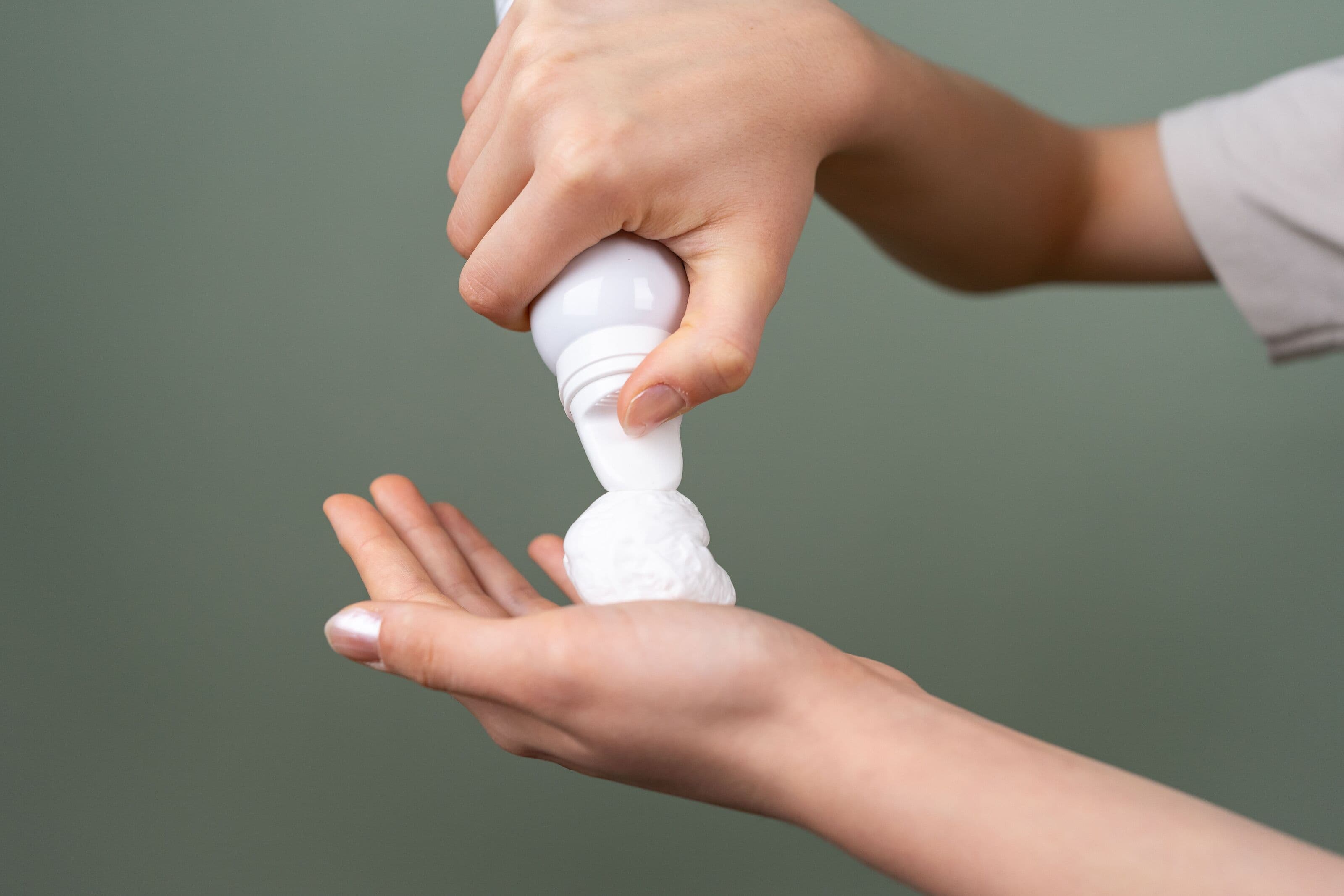
The choice of surfactant is the most consequential formulation decision in any cleanser. It determines whether your skin barrier gets repaired or damaged twice a day, every day, for the rest of your life.
This post is why we use sodium cocoyl isethionate (SCI) in our cleanser instead of the cheaper, more common sodium lauryl sulfate (SLS) found in most Pakistani face washes.
What surfactants actually do
A surfactant is a molecule with two ends — one that binds to water, one that binds to oil/grease. When you massage a cleanser into wet skin, the surfactant grabs the oily compounds (sebum, sunscreen, makeup, pollution) and emulsifies them into the rinse water. That's how cleaning works.
The problem: surfactants don't distinguish between the oily compounds you want gone (today's SPF) and the oily compounds you need to keep (your skin's lipid barrier — see ceramides).
A "harsh" surfactant strips both. A "gentle" surfactant strips less of the barrier while still removing most of the dirt. This is the entire game.
SLS — the cheap workhorse
Sodium lauryl sulfate is the most-used surfactant in the world. It's cheap (~PKR 200/kg in bulk vs PKR 800–1,500/kg for gentler alternatives), it foams aggressively (which most consumers equate with "clean"), and it cleans very effectively.
It's also the most-studied skin irritant in cosmetics. The comparative stripping research is unambiguous:
- Transepidermal water loss (TEWL — the standard measure of barrier compromise) increases 60–150% after a single SLS wash, and stays elevated for 8–12 hours.
- Skin pH rises from healthy 5.5 to 7.5+ for 4–6 hours after washing — disrupting the acid mantle that protects against bacteria.
- Ceramide content in the stratum corneum drops measurably after sustained SLS use.
SLS isn't unsafe in the toxicology sense — it's not banned anywhere. It's just badly suited for face cleansers used twice daily on living skin in a climate that's already stressing the barrier.
SCI — the gentler alternative
Sodium cocoyl isethionate is derived from coconut fatty acids and isethionic acid. It's an anionic surfactant like SLS — same general mechanism — but with a critical difference: the molecule is too large to penetrate cell membranes the way SLS does.
The result:
- TEWL after SCI wash is roughly 25–40% the increase seen with SLS.
- Skin pH stays much closer to baseline (5.5–6.5).
- Ceramide content is preserved across daily use.
SCI also produces a different foam quality — denser, creamier, less aggressive. It feels different from SLS-based foams. People who associate "clean" with squeaky-tight skin sometimes initially feel SCI doesn't clean enough; that perception fades within 2 weeks as their skin recalibrates.
What SCI costs (so you understand why most brands don't use it)
A 200ml bottle of cleanser made with SLS as the primary surfactant has a raw-material cost of PKR 50–80. The same bottle made with SCI has a raw-material cost of PKR 280–400 — roughly 4–5× higher.
That cost has to go somewhere. Either: - The cleanser is sold at a much higher price point (PKR 2,500+ retail) - The brand uses SCI in tiny amounts and keeps SLS as the primary surfactant (then markets it as "gentle, with cocoyl isethionate") - The brand absorbs the margin hit (rare in mass-market)
This is why almost all Pakistani facewashes under PKR 1,000 are SLS-based. The economics of the price point require it.
We chose to absorb the cost rather than dilute the formulation. SCI is the primary surfactant in our cleanser, with sodium cocoyl glutamate as a secondary co-surfactant. Both are amino-acid- or fatty-acid-derived. Neither is SLS or SLES.
Why this matters in Pakistani climate specifically
Three Pakistani-climate-specific reasons SCI matters more here than elsewhere:
- High UV. UV damages ceramides. If your cleanser also strips ceramides, you're losing barrier from both sides simultaneously. Slower depletion (SCI) lets your skin keep up.
- Hot showers in winter. Most Pakistani households use very hot water in winter for washing — itself a barrier-damaging factor. Adding SLS on top is too much.
- Pollution months in Lahore + Karachi. Pollution-driven oxidative stress already increases ceramide turnover. The cleanser shouldn't be adding to the deficit.
How to spot SCI vs SLS on a label
The ingredient list reads top-down by concentration. The first 3–5 ingredients usually make up >80% of the formula.
What you want to see: - "Sodium cocoyl isethionate" in positions 2–4 (after water) - "Sodium cocoyl glutamate" or "sodium lauroyl glutamate" alongside - "Coco-betaine" or "cocamidopropyl betaine" as a co-surfactant - "Decyl glucoside" or "lauryl glucoside" — gentler glucose-derived surfactants
What's a red flag: - "Sodium lauryl sulfate" or "sodium laureth sulfate" in the top 5 - "Ammonium lauryl sulfate" — same family - A long list of plant extracts at the top with the actual surfactant buried at position 8+ (often hides cheap surfactants behind a marketing-friendly ingredient list)
What about "sulfate-free" labels
"Sulfate-free" usually means no SLS and no SLES. That's the right starting point but not sufficient. Sulfate-free brands sometimes use:
- Olefin sulfonates — gentler than SLS but still moderately drying
- Sodium methyl cocoyl taurate — gentle, fine
- Decyl glucoside — very gentle, fine
- Cocamidopropyl betaine — gentle, but a known allergen for ~1% of users
A "sulfate-free" label is necessary but not the whole story. Read the actual ingredient list.
The shortest version
SLS strips skin barrier 2× harder than SCI does. It's used in most cheap Pakistani facewashes because it costs 4–5× less. Used twice daily in Pakistani climate, the cumulative damage is measurable. Pay more for an SCI-based cleanser, or use cleanser less often (one cleanse instead of two if you don't wear SPF or makeup).