Ingredients7 min read
Hyaluronic acid in Pakistani humidity: when it works against you
HA pulls water from wherever it can find it. In Karachi humidity that's the air. In Lahore winter that's your skin. Same product, opposite effect.
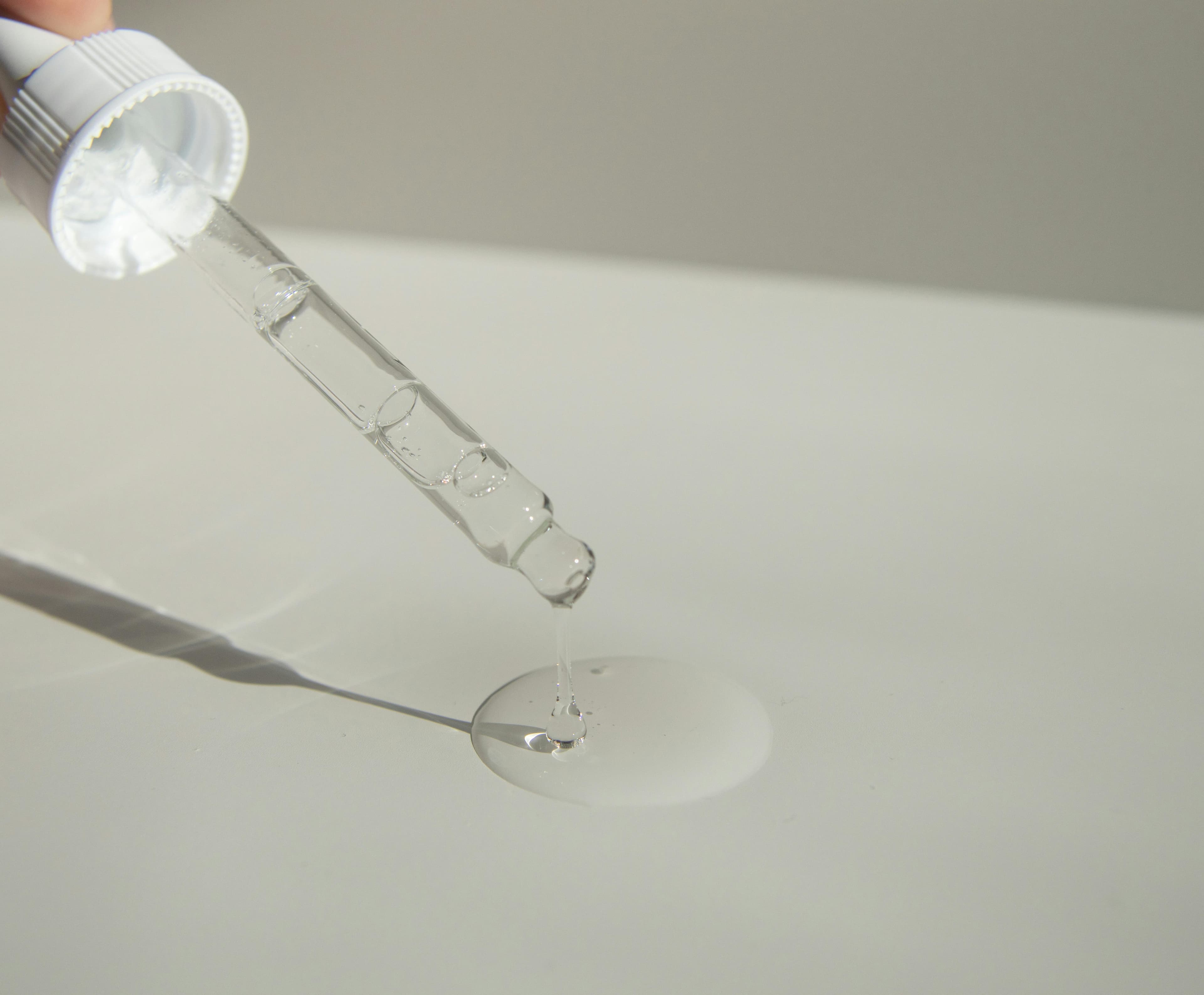
Hyaluronic acid is the most universally-recommended hydration ingredient in skincare. It's also one of the most context-dependent. The same product can hydrate beautifully in one climate and dehydrate skin in another.
This post is when HA helps in Pakistani climate, and when it actively makes things worse.
What HA actually is
Hyaluronic acid is a humectant — a molecule that binds water and holds it in place. The marketing claim is that it holds 1,000× its weight in water. That's true in lab conditions; in real skincare it holds substantially less but still meaningfully more than most other ingredients.
Read more on hyaluronic acid.
The critical thing to understand is that HA pulls water from whatever's nearby. If you apply HA to skin and:
- The air around you is humid (above ~60%) — HA pulls moisture from the air into your skin. This is the helpful case.
- The air is dry (below ~40%) — HA pulls moisture from your skin's deeper layers into the surface, where it then evaporates. This is the harmful case.
Same product. Opposite effect. The variable is the humidity gradient.
Pakistani climate map
| City | Spring | Summer | Monsoon | Winter | |---|---|---|---|---| | Karachi | 50–65% | 70–85% | 75–90% | 40–55% | | Lahore | 40–55% | 35–60% | 70–85% | 35–50% | | Islamabad | 35–55% | 50–70% | 65–80% | 40–60% |
Above 60% humidity, HA is helpful. Below 40%, it can backfire. Between 40–60%, it depends on what else you do (most importantly: layering).
So:
- Karachi: HA is generally fine year-round. Slight dehydration risk in winter.
- Lahore: HA is great in monsoon, risky in pre-monsoon spring + dry winter.
- Islamabad: moderate risk year-round; specifically problematic in dry winter.
How to use HA without the dehydration backfire
Three rules:
1. Apply to damp skin
Don't wait for skin to dry after cleansing. Apply HA serum or HA-containing moisturizer within 30 seconds of patting your face. The water on your skin is what HA binds to first — once it's bound, you have a moisturized layer to work with regardless of ambient humidity.
2. Seal it in immediately
After HA, apply a moisturizer with occlusive components — squalane, shea butter, or a balm. The occlusive prevents the water HA pulled in from evaporating. Without this seal, in dry air, the water leaves within an hour.
Our gel moisturizer does both jobs in one product — HA to attract water, squalane and ceramides to seal it in. This is why we recommend it as a single-product alternative to layering separate HA serum + moisturizer.
3. Watch for the warning signs
If you're using HA in dry conditions and your skin actually feels MORE tight an hour after application, drop the HA from your routine for that season. Switch to a non-humectant moisturizer (look for shea butter + ceramides + squalane, no HA or glycerin in the top 5).
Molecular weight matters
This is technical but important. HA comes in different molecular weights:
- High molecular weight HA (>1,000 kDa) — sits on the surface, forms a film, doesn't penetrate. Hydrates the surface, doesn't reach deeper.
- Low molecular weight HA (<50 kDa) — penetrates into the stratum corneum, hydrates deeper layers.
- Cross-polymer HA — engineered for slow release, works at multiple depths.
A good HA formulation uses a mix of weights. A bad one uses only high-weight (cheap) HA — which feels hydrating immediately but does nothing past 10 minutes.
For Pakistani buyers: if you're buying a separate HA serum, look for "multi-molecular weight" or "MW: 50/500/2000 kDa" in the marketing. Single-weight HA at premium prices is overpaying.
Combining HA with other actives
HA is one of the most compatible skincare ingredients. It's safe to layer with:
- Niacinamide — works particularly well together for tone + hydration
- PHA / gluconolactone — gluconolactone is itself a humectant, so the combination is hydration-positive
- Salicylic acid — buffers the dryness SA can cause
- Vitamin E — pairs well as antioxidant support
- Retinol — when retinol launches, HA before it reduces irritation
- Sunscreen — HA under SPF is fine; just allow 60 seconds for HA to absorb
Less compatible: - High-strength glycolic acid in dry air — glycolic + HA in low humidity is a particularly drying combination - Alcohol-based toners — defeat the purpose of HA
Who probably doesn't need a separate HA product
If you use our gel moisturizer, you're already getting HA in a properly-sealed formulation. A separate HA serum on top is redundant for most adults.
Add a separate HA serum if: - You have visibly dehydrated skin (fine lines that disappear when you press water onto your face) - You're in monsoon and want a lighter routine that maximises hydration - You're using retinol and need extra buffering
Skip the separate HA if: - Your moisturizer already has it (most modern ones do) - You're in pre-monsoon spring or dry winter (it can backfire) - You're using minimal products and don't want to add complexity
The shortest version
HA pulls water from where it's available. In Pakistani humid months, that's air → skin (helpful). In dry months, that's deeper skin → surface → evaporation (harmful). Apply to damp skin, seal with an occlusive, and consider dropping HA in dry winter if you notice tightness.