Routine9 min read
Body skincare for Pakistani climate: KP, body acne, and even tone
The skin below your jaw is thicker, drier, and slower to turn over than your face — and it has its own problems: chicken-skin arms, back acne, darkening at the neck and knuckles. What the evidence says actually helps.
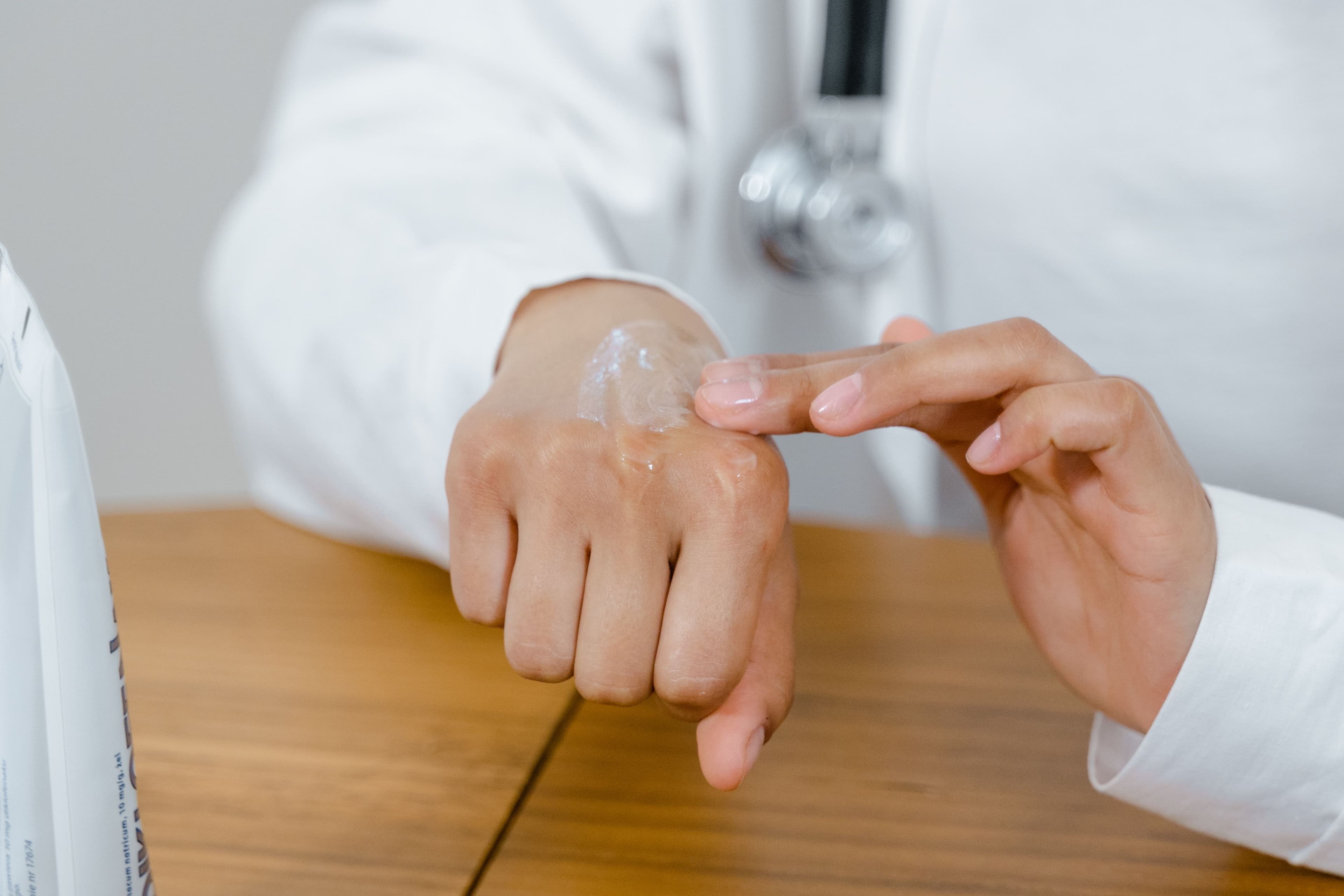
Most skincare advice stops at the jawline. But the body has its own concerns — keratosis pilaris on the arms, acne on the back and chest, uneven tone on the neck, knuckles and elbows — and the products built for your face don't always translate.
Body skin is genuinely different: a thicker stratum corneum, fewer and less active oil glands in most areas, and slower cell turnover than facial skin (which renews in roughly a month). That's why the body trends dry, why it responds more slowly to actives, and why it needs its own approach.
"Chicken skin" — keratosis pilaris
Those small rough bumps on the backs of the upper arms and thighs are keratosis pilaris (KP). The cause is keratin plugging the hair follicles. It's extremely common — affecting an estimated half or more of adolescents and a large share of adults — and the most important thing to know is that it is harmless and, per the American Academy of Dermatology, has no cure and no way to prevent it. Anyone selling you a "cure" is selling folklore.
What genuinely improves the appearance: keratolytics plus moisturization. Urea, lactic acid and other alpha-hydroxy acids, salicylic acid, and retinoids soften the keratin plugs and smooth the surface, while consistent moisturizing addresses the dryness KP rides on. It's management, not a fix — stop, and it gradually returns. That's not failure; that's the condition.
Acne below the neck
Acne on the chest, back and shoulders ("truncal acne") is common — lifetime estimates run high — and in Pakistani heat it's driven hard by sweat, friction and occlusion: tight clothing, gym kit left on too long, a backpack, a dupatta trapping heat and sweat against the skin.
There's a crucial distinction here. Not every bump on the chest and back is acne. Malassezia folliculitis — "fungal acne" — is a yeast overgrowth that mimics acne but presents as itchy, uniform small bumps, thrives in hot humid weather and sweat, and notably does not respond to normal acne treatment (Rubenstein & Malerich, review, 2014). It responds to antifungals instead. If your "back acne" is itchy, uniform and resists every acne product you try, this is likely why — and worth a dermatologist's confirmation. We go deeper on the distinction in the monsoon post and on adult acne generally.
For true body acne: shower promptly after sweating, choose breathable fabrics, and a salicylic-acid wash or exfoliating step keeps the pores clear.
Even tone — said honestly
This is where the Pakistani market goes badly wrong, so let's be precise. Darkening at the knuckles, elbows, knees, underarms and neck has real, identifiable causes — and "not washing properly" is rarely one of them.
- Post-inflammatory hyperpigmentation (PIH) — the marks left after body acne, ingrown hairs, waxing or friction. PIH is more common and more stubborn in melanin-rich skin. The evidence-based approach pairs a topical agent (niacinamide, azelaic acid, retinoids) with daily sun protection — UV and visible light drive pigment, and darker skin pigments more in response to UVA.
- Acanthosis nigricans — velvety darkening and thickening in the folds of the neck, the underarms, and over the knuckles. This is often friction-related and, importantly, a recognised skin marker of insulin resistance. It is not dirt, and no amount of scrubbing or bleaching removes it — addressing the underlying metabolic picture (with a doctor) is what helps. Telling someone to scrub their dark neck "clean" is both wrong and harmful.
And the framing we will never compromise on: evidence-based brightening evens overproduced pigment in specific areas. It does not — and should not — lighten your natural skin colour. That is the entire difference between brightening and the whitening creams we refuse to sell. The mercury and unregulated-hydroquinone products marketed for dark necks and knuckles are a documented health hazard — mercury is toxic to the kidneys and nervous system and is being phased out worldwide under the Minamata Convention; prolonged hydroquinone misuse can cause exogenous ochronosis, a permanent paradoxical darkening (WHO; US FDA). The "fix" is worse than the concern.
A body brightening lotion built around niacinamide and gentle exfoliating acids — to fade PIH and smooth tone, not to lighten skin — is on our roadmap. Paired with sun protection on exposed arms, neck and hands (an SPF stick makes reapplying on the go realistic), that's the honest version of "even tone."
A simple body routine for the climate
- Cleanse without stripping; shower promptly after sweat.
- Exfoliate problem areas (KP arms, body-acne zones) with a chemical keratolytic a couple of times a week — not a harsh scrub.
- Moisturize while skin is still damp, especially the drier limbs.
- Protect sun-exposed skin. Body pigmentation on arms, neck and hands is largely a sun story; daily protection is what stops it deepening.
The short version
Body skin is thicker, drier and slower than your face, with its own problems. KP is harmless and managed, not cured. Itchy uniform "body acne" may be fungal — treat it differently. Dark knuckles and necks have real causes (PIH, friction, insulin resistance) that scrubbing and whitening creams don't fix and often worsen. Even the tone that's genuinely uneven; never try to lighten the skin you have.